
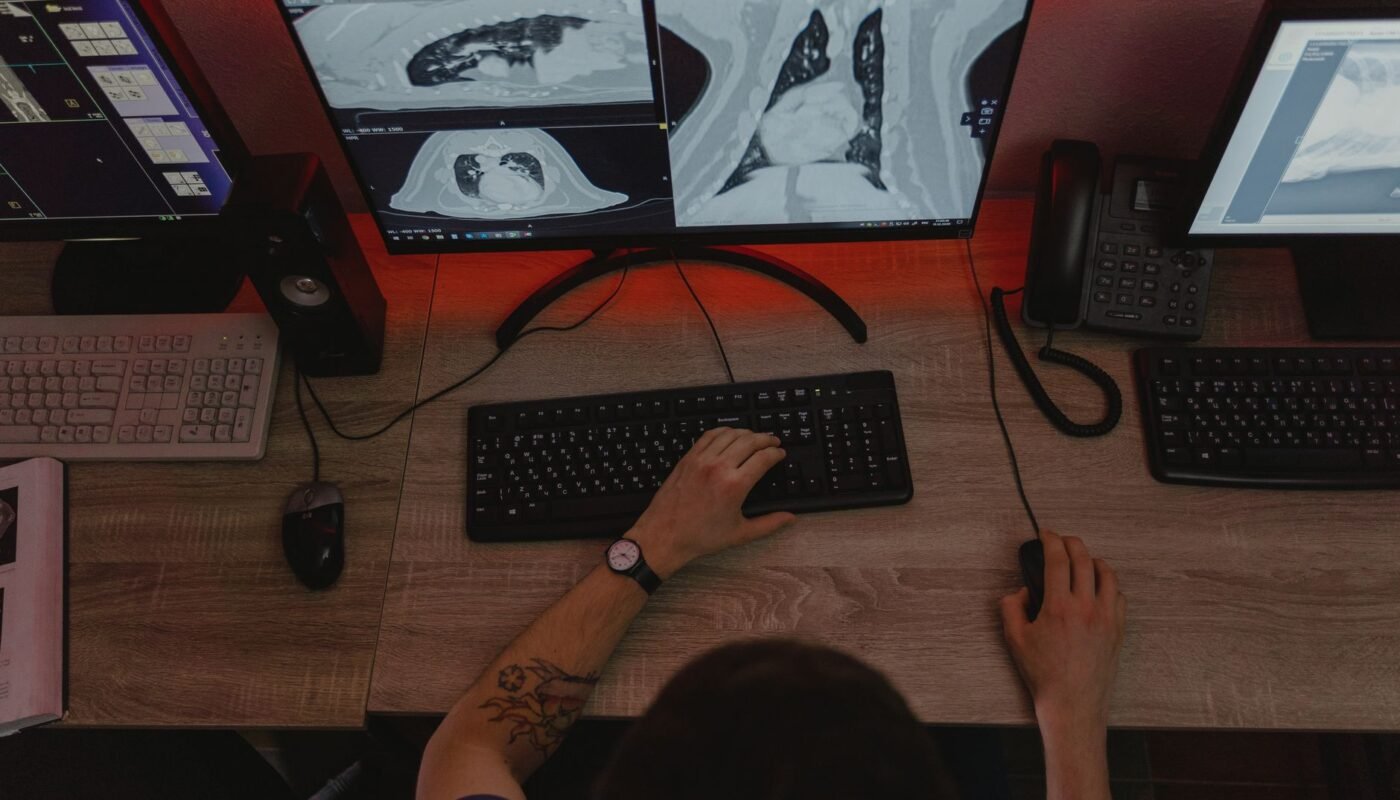
Royal Philips announced Advanced Image Insights on November 19, a cloud-based product for radiology departments that combines Philips advanced visualization applications with central management of third-party imaging AI. It connects to Philips HealthSuite Imaging, the company’s PACS, and sends analysis results into the radiologist’s existing workflow. Philips will show it at RSNA 2026 in Chicago, booth #6730.
What Philips announced
Philips describes Advanced Image Insights as a single point of access to Philips and third-party applications. The release says the product delivers analysis results, produced by advanced visualization and AI applications, into existing radiology workflows. Results can also go into structured multimedia reports through Philips Interactive Reporting Assistant, which brings findings, key images and AI results together with hyperlinks, tables and graphs. Philips says built-in voice recognition, automatic template selection and data population cut repetitive documentation and manual data transfer.
The release gives one worked example. In a lung CT workflow, AI applications can analyze images in the background for signs of incidental pulmonary embolism, while other applications support quantitative lung nodule assessment. The results appear in the clinical workflow for the radiologist to review alongside the images.
On responsibility, the release is plain. It says “Radiologists remain responsible for reviewing images and AI outputs and making the final interpretation,” while referring clinicians can benefit from additional context for diagnosis, treatment planning and patient follow-up.
How it is delivered
Advanced Image Insights is a managed software-as-a-service offering on Philips HealthSuite, powered by Amazon Web Services (AWS). Philips manages the underlying infrastructure and operations, which the company says helps reduce IT burden and supports expansion across sites and subspecialties. The release also says the product enables remote access to advanced analysis tools.
A footnote carries the terms that matter most to a buyer. It says “Each application retains its own intended use and regulatory status,” and that availability of the solution and of individual applications varies by market. The release names no prices, no customers, no list of supported third-party AI vendors and no go-live dates.
Who should read the details
The product speaks to health systems and imaging groups that already run, or plan to run, several AI applications next to a PACS. Philips frames the problem this way: radiology teams face growing imaging volumes, increasingly complex studies and continued workforce pressures, and managing a growing number of disconnected applications adds complexity and manual work. The pitch is one orchestration layer between the images, the AI outputs and the report.
That layer sits on the vendor’s own PACS. The release says the solution is connected to HealthSuite Imaging, and the automation it describes moves clinical analysis tools directly into that PACS. A hospital on a different PACS, or on a different cloud, should ask Philips what the connection requires before counting the product as an option.
Questions for radiology and IT leaders
Four checks follow for a CIO, an imaging informatics lead or a PACS administrator.
- Ask for the list of third-party AI applications supported today, by modality and clinical specialty. The release says the product provides access across supported modalities, specialties and sites, and does not name them.
- Check each application’s regulatory status in your market. Because each keeps its own intended use, an orchestration platform does not change what a given algorithm is cleared or approved to do.
- Confirm where the work happens. The delivery model is cloud SaaS on AWS, so data residency, contract terms and network paths to each site need review by your security and legal teams.
- Decide who reviews AI outputs and how that review is recorded. Philips says the radiologist makes the final interpretation, which puts the audit trail on the health system’s side.
Philips offered no outcome data for the product. Any claim about reading time, report turnaround or detection rates would need a pilot at your own sites, with your own measurements.